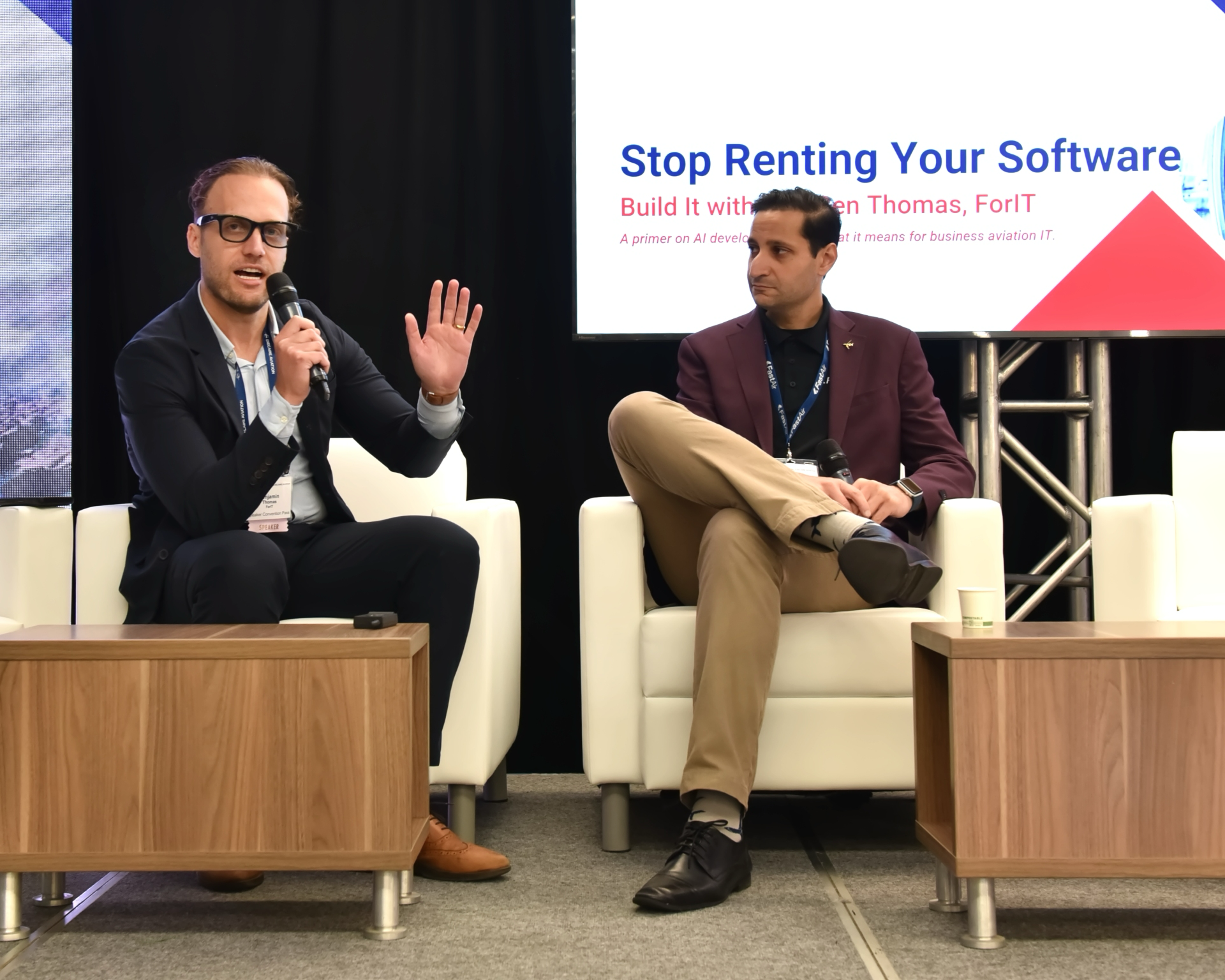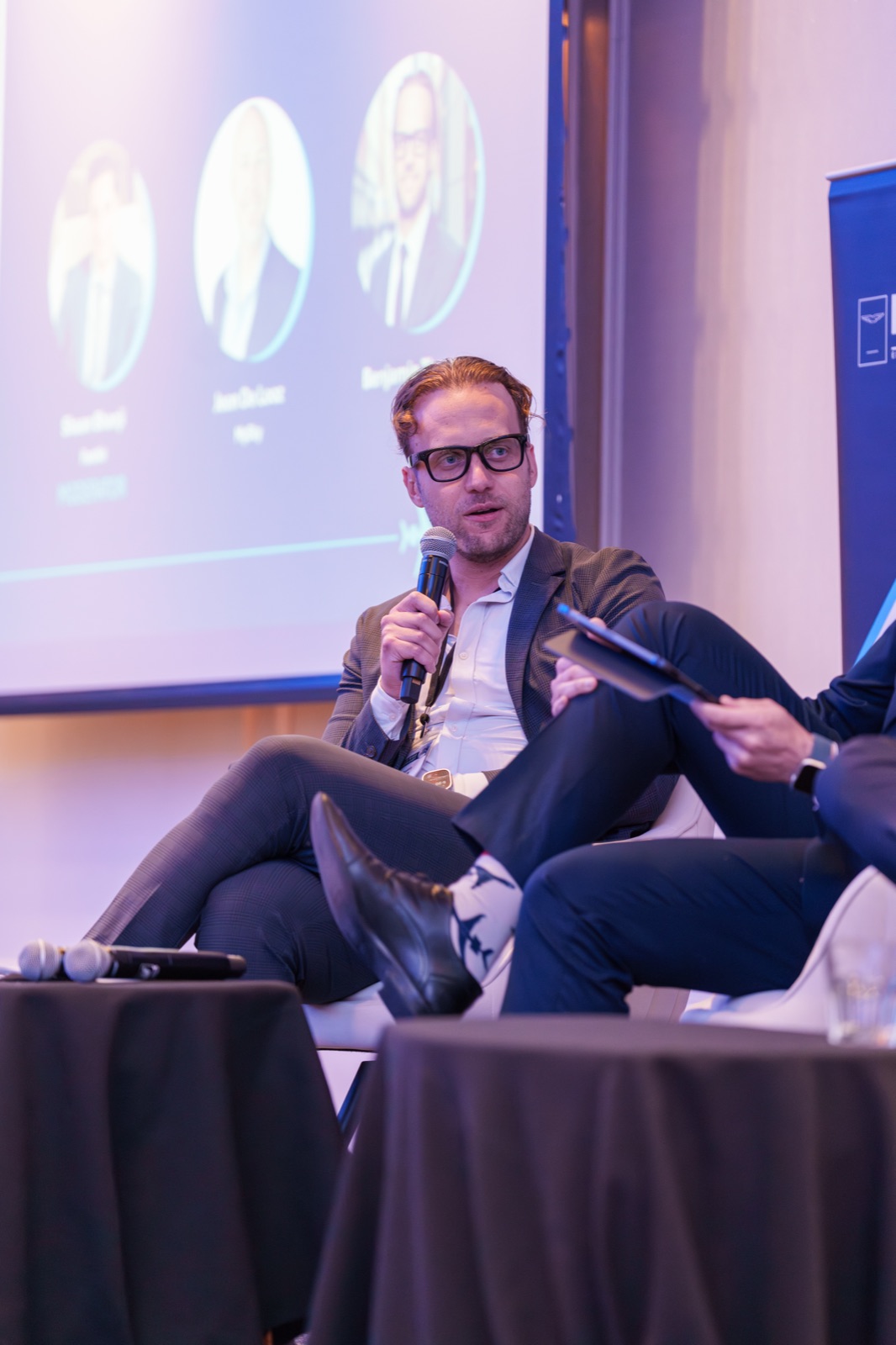
We joined the panel "Digital Transformation in Business Aviation: Where Do We Stand?" at the Elite Wings Aviation Summit in Montreal on June 16, days after the Canadian Business Aviation Association (CBAA) Innovation Stage in Calgary. Shaan Bhanji of Fast Air moderated, alongside Jean De Looz, chief operating officer (COO) of MySky. The panel brought together an operator, a software platform, and our experience as fractional chief technology officers (CTOs). Here is what we discussed.
Most operators cannot name their own software
We ran a quick poll with the room: how many software applications does it take to run your operation? The estimates landed around 30, which is the same number nearly every operator gives us. In every full audit we have run, the real count has come back over 100. And 10 to 15 percent of that is redundant, the same job paid for twice, which is cost you can take out the week you find it.
Before buying more technology, operators need to count what they already run. Almost nobody has done that.
The spend gap is real, and nobody is measuring it
Business aviation spends, on average, 3 to 4 percent of revenue on technology. In the enterprise world we came from, companies that want to sit on the leading edge put 12 to 15 percent into it. That gap is the story.
And there is no published benchmark for business aviation IT. If you try to look up where you should sit on tech spend, on quote-to-book time, on the size of your stack, there is nothing out there. We are working on a benchmark so operators can compare their IT spending and performance.
Build or buy: it depends, and now it is finally a real question
For thirty years the answer was always rent, because building was a rich company's game and the market was too small for anyone to build for it. That changed. But "build everything" is the wrong lesson to take from it. The honest answer is that it depends on your stage, your scale, and where your pain actually is.
Rent when the vendor brings something you cannot easily replicate: proprietary data built up over years, or complex integrations they maintain so you do not have to, like payments or security-sensitive workflows. A vendor that keeps evolving the product earns its rent. A subscription that does the same thing five years from now does not.
Build when the software is simple, expensive, and hands you no unique data or integration in return, and especially when it touches the part of your operation that makes you different. The cost of building software that fits you exactly has dropped 10 to 100 times. The harder part is knowing the operation well enough to build the right software. Operators already have that knowledge.
Own your data
One thing the whole panel agreed on: read your data clauses. Most software as a service (SaaS) contracts grant the vendor a perpetual, unlimited license to your data. On one vendor request for proposal (RFP) we ran for an operator, the incumbent wanted ten thousand dollars just to hand back the operator's own data. Your flight history and your customer list should be yours. Check the contract before you sign it, not at renewal.
The proof is already in operations
For AI in safety-critical work, we pointed to regulatory approval. We produced a Minimum Equipment List, primarily AI-written, that Transport Canada approved. We authored another for a hydrogen-powered aircraft, a brand-new airframe with no precedent to copy from.
On the everyday end, we built a crew-records system that runs for a couple of dollars a month and gave a chief pilot back the forty-plus days a year he had been spending typing records by hand. A small sliver of AI to read each document and file it, with the rest plain automation. That was a high return on a small amount of AI, and evidence that it can do useful aviation work.
What it actually takes
None of this requires becoming a software company. It requires one capable technical person who can steer the build and own it, pointed at the workflow that wastes the most hours or fits you worst. The budget constraint that defined the last thirty years moved. The remaining challenge is finding a technical person to work with the domain expert.
Thanks to Shaan Bhanji of Fast Air for moderating, to Jean De Looz of MySky for a sharp exchange on build versus buy, and to the Elite Wings team for putting it together.
Talk with us if you want help reviewing the software your aviation operation uses.
Benjamin Thomas
ForIT Team